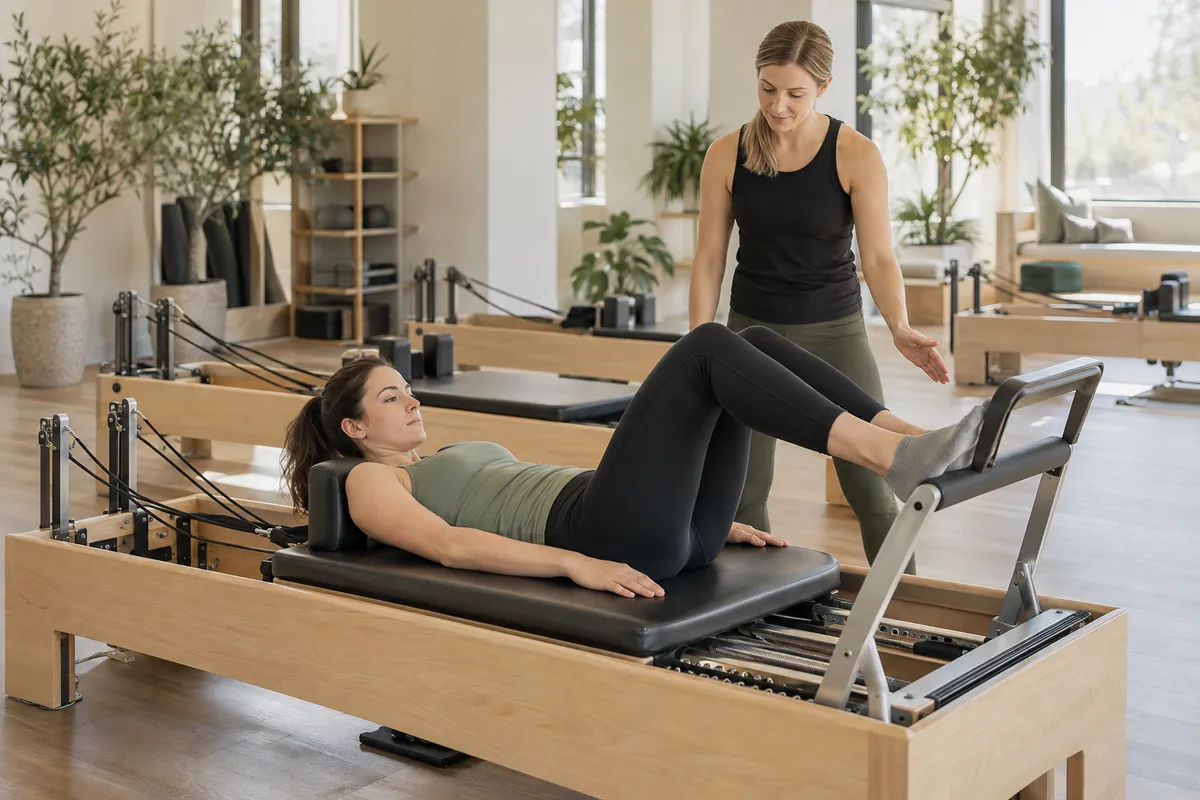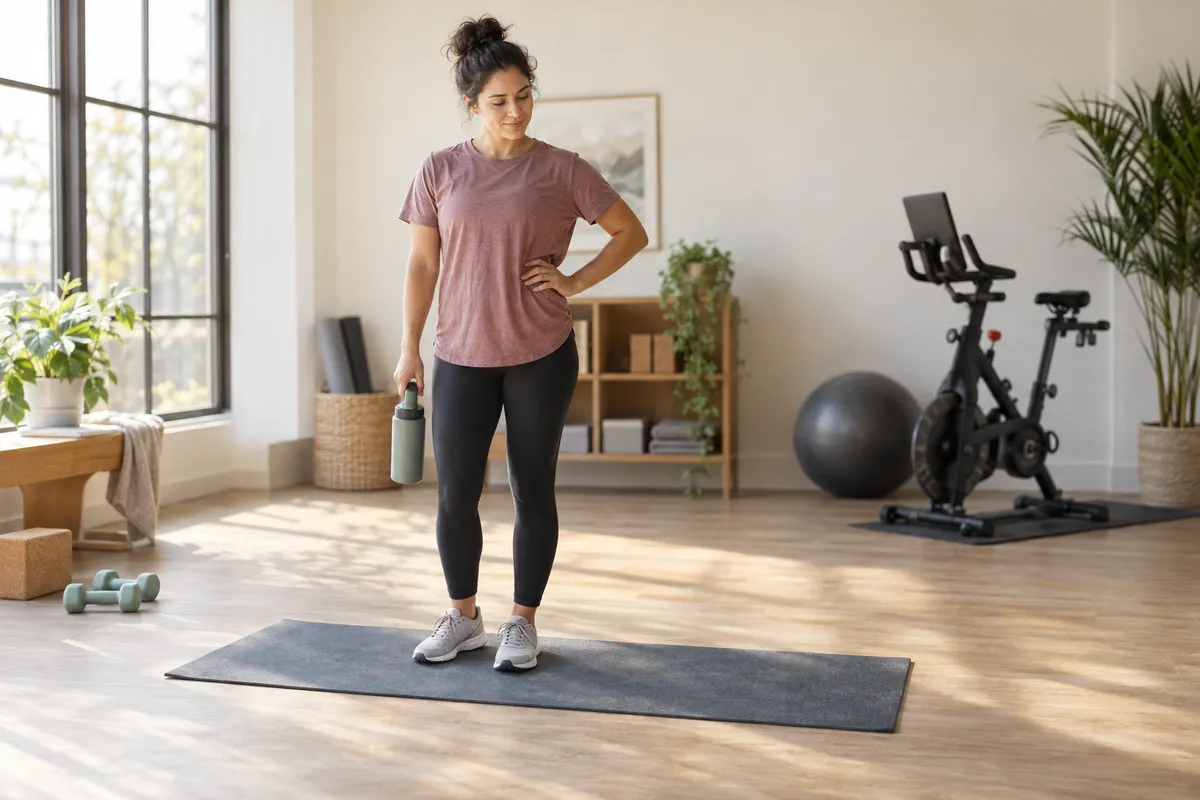
Most of us train to look strong or lift more. Fewer of us train to stay steady on our feet at 70. Expert trainer Antonietta Vicario, in a piece reported by Fitandwell, argues that balance and stability aren't just fitness skills but part of maintaining independence. Below, you'll get her core idea, why it matters, and a simple way to build a 20-minute home session around it.
One note up front: the original report points to two kinds of moves, core-stabilizing exercises and unilateral (one-sided) exercises. It doesn't give me a full exercise list here, so I won't pretend to reproduce her exact workout. What follows is a practical framework built on her two principles, with yoga-friendly examples you can adapt.
Why balance is about independence, not just fitness
Vicario's framing, per Fitandwell, is that balance and stability support control and longevity. Think of what independence looks like day to day: stepping off a curb, getting out of a chair, carrying groceries up stairs, reaching for a high shelf. Each one asks your body to stay controlled while it moves or while one side bears more load than the other.
That is a different demand from a standard strength session. Strength gets you the power. Stability decides whether you can use it safely.
The two ingredients: core stability and one-sided work
Core-stabilizing moves
The focus here is a core that holds you steady, not one that crunches. Stabilizing work asks your midsection to resist movement while your arms or legs do something. Planks and their variations are a familiar example, and yoga fans will recognize the same idea in Plank Pose and Boat Pose holds.
Unilateral exercises
Unilateral means working one side at a time. Real life is rarely symmetrical: you step with one foot, reach with one arm. Training sides separately challenges balance and can show you which side is weaker. Tree Pose and Warrior III are yoga's classic one-legged tests.
A 20-minute home session you can build
This is a template, not Vicario's prescribed routine. Adjust the load to your level, and use a wall or sturdy chair nearby.
Minutes 0 to 4: Warm up
March in place, roll your ankles and shoulders, and do slow cat-cow on hands and knees to wake up your spine and core.
Minutes 4 to 10: Core stability
Pick two moves where your trunk stays still while limbs move or hold. Examples: a forearm plank, or a bird dog (extend opposite arm and leg, pause, return). Do 3 rounds of 20 to 30 seconds per move, resting briefly between rounds.
Minutes 10 to 18: One-sided work
Pick two or three single-side moves, such as:
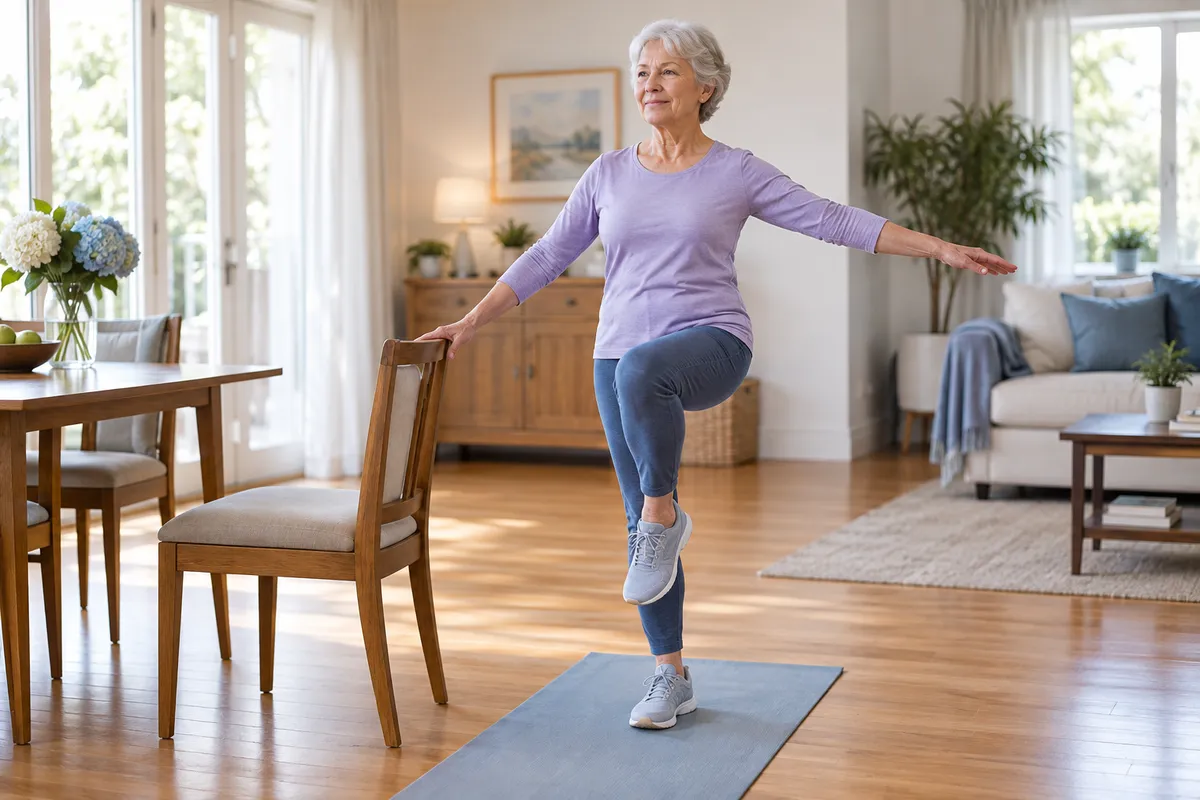
- Single-leg stand or Tree Pose, holding 20 to 30 seconds per side
- Split squats or step-backs, 8 to 10 reps per side
- A single-arm carry or press if you have a dumbbell (the source describes this as a dumbbell routine), keeping your torso upright
Always do both sides, and start with your weaker one so you don't stop short on it.
Minutes 18 to 20: Cool down
Slow breathing, a standing forward fold, and a gentle hamstring stretch. Let your heart rate settle.
Making it beginner-friendly
- Keep a hand free. Fingertips on a wall or chair back is plenty. Reduce support as you improve.
- Go slow. Controlled movement is the point. Speed hides wobbles.
- Use light weight or none. Add dumbbells only when the bodyweight version feels steady.
- Treat wobbling as information. Small corrections are your balance system working.
If you have a medical condition, a history of falls, or joint concerns, check with a healthcare professional or physical therapist before starting.
Where this fits in your week
The Fitandwell piece positions this kind of work as a complement to strength training, not a replacement. Two or three short sessions a week, or a ten-minute version tacked onto a yoga practice, is a sensible place to start. This session length and frequency is my suggestion, not a figure from the report.
Your next step
Tonight, stand beside your kitchen counter, rest your fingertips on it, and balance on one foot for 20 seconds. Switch sides. Note which one felt harder, then start your next session with that leg.