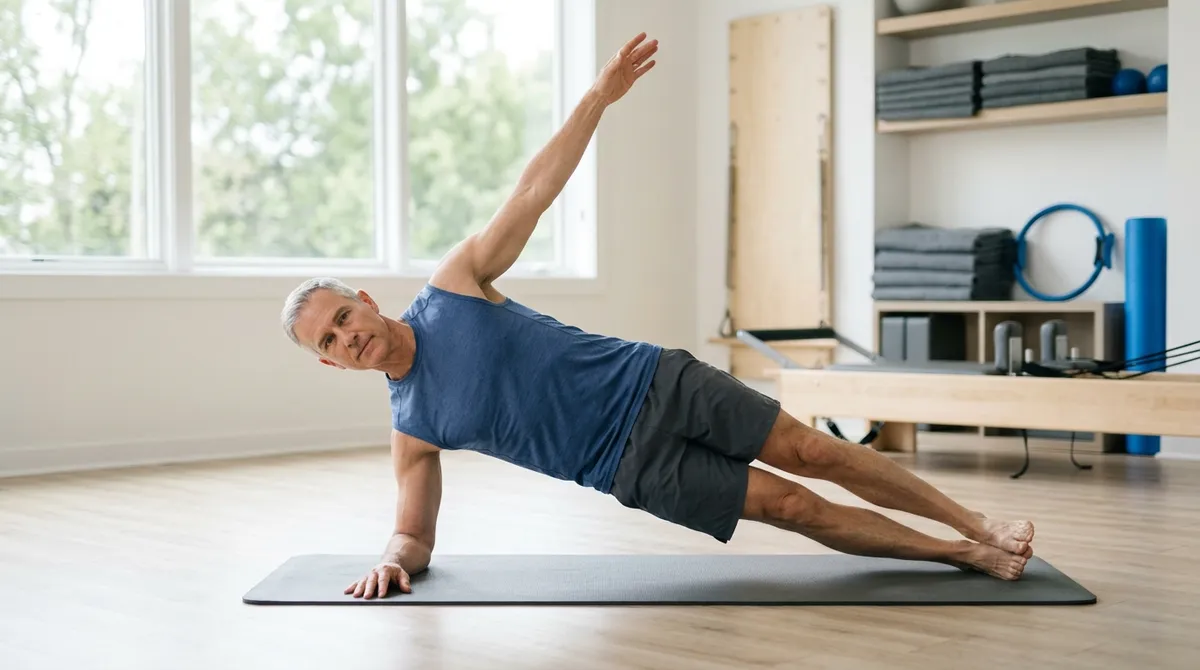
Building functional core strength is vital for men over 50, especially to enhance everyday movements like climbing stairs, golfing, or carrying groceries. If you're tired of crunches and seeking a more effective core exercise, it's time to embrace the side plank. This Pilates move not only strengthens the core but also supports your spine and improves balance, making it an excellent choice for aging adults.
Why Side Planks?
Side planks are a game-changer for several reasons:
- Functional Strength: Unlike crunches, which primarily target the front of the abdomen, side planks engage the entire lateral core. This helps you with stabilization and rotational strength in your daily activities.
- Spine Support: Strong lateral core muscles provide better support for your spine, which can alleviate back pain and improve posture.
- Balance Improvement: As we age, maintaining balance becomes increasingly important. Side planks challenge your stability, helping to fend off falls and improve coordination.
Proper Form for Side Planks
To get the most out of your side plank, follow these form cues:
- Positioning: Lie on your side with your legs straight and stacked on top of each other. Use your forearm to support your upper body, ensuring your elbow is directly under your shoulder.
- Lift Your Hips: Engage your core as you lift your hips off the ground, aligning your body from head to toe. Avoid sagging or arching your lower back.
- Maintain a Straight Line: Keep your shoulders, hips, and feet in one straight line. If your knees are on the floor, your body should still form a straight line from head to knees.
- Breathing: Breathe deeply and maintain tension in your core throughout the hold.
- Hold the Position: Start by holding the position for 10-15 seconds and gradually work your way up to 30 seconds or longer as you gain strength.
Beginner Modifications
If you're new to side planks or dealing with back pain, here are a couple of modifications:
- Knee Down: You can drop your bottom knee to the ground while keeping your upper leg extended. This reduces the load and can make it easier to maintain form as you build strength.
- Elevate Your Hand: Place your hand on an elevated surface like a low table or bed for additional support until you're ready for the full side plank.
Progressing to Advanced Side Planks
Once you’re comfortable with the basic side plank, consider these progressions to challenge yourself:
- Leg Lifts: While holding the side plank, lift your top leg to engage your hip muscles and increase difficulty.
- Rotational Side Plank: Transition to a rotational side plank by reaching your top arm under your body, then returning to the starting position. This variation enhances shoulder stability and targets your obliques.
- Weighted Side Plank: If you're ready for an extra challenge, try holding a light dumbbell in your free hand while in the side plank position.
Why This Matters
Adopting side planks into your routine doesn’t just benefit your core strength—it translates directly to improved functionality in daily tasks. Building lateral core strength can enhance your performance in activities such as golf or simply getting in and out of a car.
Takeaway
Ditch the crunches and start incorporating side planks into your weekly exercise routine. By focusing on lateral core strength, you’ll not only feel more stable but also improve your overall movement quality as you age. Remember, consistency is key, so commit to regular practice and enjoy the benefits of greater strength and balance.