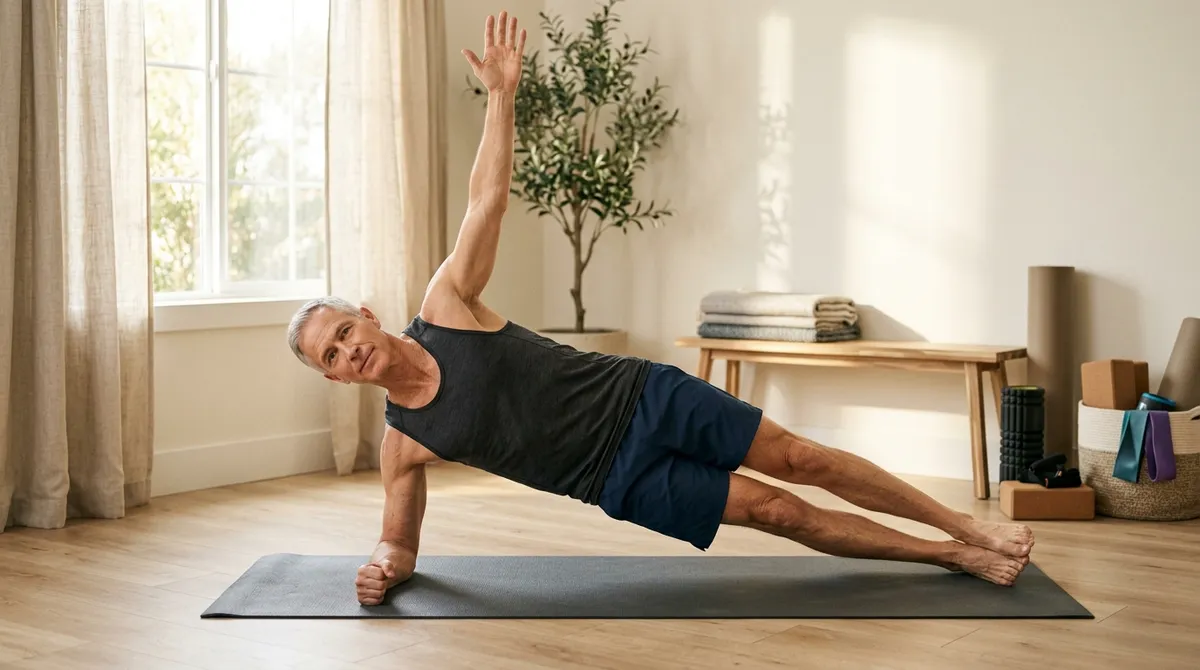
If you’re over 50 and looking for a way to strengthen your core effectively without risking injury, it's time to rethink your approach. Side planks are an excellent alternative to traditional crunches, providing functional core strength that translates to real-life movement. By the end of this guide, you'll understand how to perform side planks properly, their benefits, and a four-week progression to enhance your strength effectively.
Why Side Planks?
As we age, maintaining core strength becomes increasingly important. Many traditional exercises, like crunches, can place undue stress on the spine, especially for those dealing with back pain or reduced stability. Side planks, on the other hand, emphasize lateral strength—an essential, yet often overlooked aspect of core fitness. This exercise not only strengthens your obliques but also supports your spine, improves posture, and enhances balance.
Benefits of Side Planks
- Strengthens Functional Core: Targeting the entire core, side planks help you build strength that supports daily activities, from carrying groceries to climbing stairs.
- Improved Posture: A stronger core provides better spinal alignment, which can alleviate discomfort and improve overall posture.
- Enhanced Balance and Stability: Regularly practicing side planks can help reduce fall risk by improving your balance, making you feel more stable in daily movements.
- Reduced Back Pain: Strong lateral muscles support your back, which can help diminish back pain that many experience as they get older.
How to Perform a Side Plank
Basic Form Cues:
- Starting Position: Begin by lying on your side with your legs straight and stacked on top of each other. Your elbow should be directly under your shoulder, and your forearm should be perpendicular to your body.
- Engage Your Core: Pull your navel towards your spine to engage your core muscles. This will provide stability as you lift.
- Lift Your Hips: Press into your forearm and lift your hips off the ground. Your body should form a straight line from head to heels. Avoid letting your hips dip or your back sag.
- Hold the Position: Maintain this position for 15-30 seconds, breathing steadily. Focus on keeping your hips high and your core engaged.
- Lower Back Down: Gently lower your hips to the ground and rest before repeating on the other side.
Common Mistakes to Avoid:
- Letting the hips drop: This reduces the effectiveness of the exercise and can cause discomfort.
- Incorrect elbow positioning: Ensure your elbow is directly under your shoulder to protect your joints.
- Holding your breath: Keep breathing steadily throughout the hold.
Side Plank Progression
Week 1: Basic Side Plank (15-30 seconds)
- Perform 2 sets of basic side planks, holding for 15-30 seconds on each side.
Week 2: Modified Side Plank
- If the basic side plank is too challenging, modify by dropping your lower knee to the ground while keeping your top leg straight. Hold for 20-40 seconds, 2 sets on each side.
Week 3: Side Plank with Leg Raise
- From your side plank position, lift your top leg straight up and hold. This challenges your core further and enhances balance. Try to hold for 20-40 seconds, 2 sets on each side.
Week 4: Full Side Plank (30-60 seconds)
- Return to the full side plank and aim to hold for longer durations. Work up to 30-60 seconds while maintaining proper form. Complete 2 sets on each side.
Conclusion
Transitioning away from crunches to exercises like side planks can make a significant difference in your core strength and overall well-being after 50. Not only do side planks improve functional strength, but they also play a crucial role in daily activities, posture, and back health. Start incorporating this exercise into your routine, and empower yourself with strength that keeps you active and independent. Remember, the journey toward better fitness is gradual, so listen to your body and progress at your own pace.