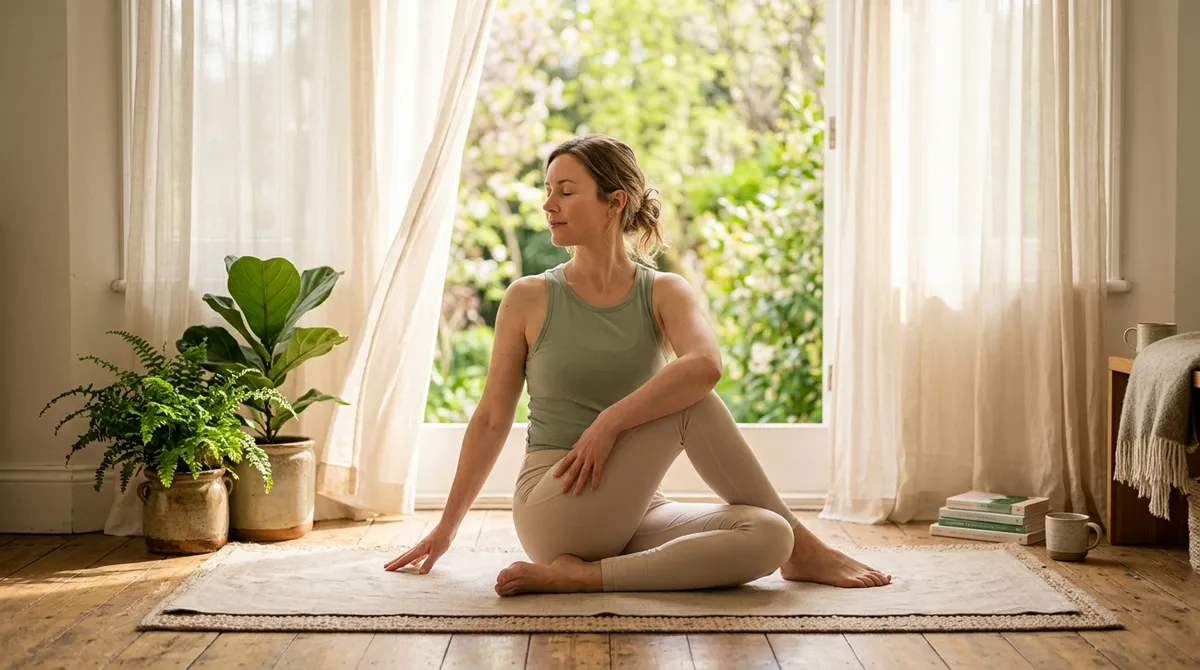
Spring is an ideal season to refresh your movement routine, and a yoga practice built around clearing breaths and gentle twists can help the body feel lighter, looser, and more focused. A spring-inspired Fitness Friday routine can support mobility, posture, balance, and mindful energy without requiring intense equipment or a long workout window.
Why Twisting Yoga Poses Fit the Spring Season
Many people associate spring with renewal. Homes get cleaned, schedules shift, and outdoor activities return. The same idea can apply to the body. Twisting yoga poses encourage rotation through the spine, ribs, shoulders, and hips. These movements can counter long periods of sitting and help restore range of motion.
Twists are often described as clearing poses because they combine movement, breath, and awareness. While yoga should not be viewed as a medical detox, rotation can stimulate circulation, wake up tired muscles, and improve how the torso moves during daily tasks. When practiced slowly, twisting also offers a calming mental reset.
This style of yoga is especially useful in spring because it bridges winter stiffness and warmer-weather activity. Instead of jumping directly into high-impact workouts, gentle twisting poses can prepare the body for walking, gardening, cycling, hiking, and outdoor sports.
The Role of Breath in a Clearing Yoga Practice
Breath is the foundation of a spring yoga sequence. Before moving into deeper poses, it helps to begin with a few slow inhales and longer exhales. This simple pattern can settle the nervous system and improve body awareness.
In twisting postures, breath also provides structure. A common approach is to lengthen the spine while inhaling, then rotate gently while exhaling. This keeps the movement controlled and reduces the urge to force the pose. The goal is not to twist as far as possible. The goal is to create space, ease, and steady engagement.
Clear breathing also helps practitioners notice tension. If the breath becomes strained, the twist may be too deep. Backing out slightly often makes the posture more effective and safer.
How to Prepare the Body for Twists
A short warmup makes twisting poses more comfortable. Start with seated or standing shoulder rolls. Then move into gentle side bends to open the rib cage. Cat-cow movements can also loosen the spine and prepare the back for rotation.
Hip mobility matters too. Many twisting poses involve the pelvis, hamstrings, and glutes. Tight hips can shift pressure into the lower back. A few low lunges, figure-four stretches, or seated forward folds may help the body move more evenly.
Keep the warmup simple. Five minutes is often enough. The body should feel awake, not fatigued, before the twisting sequence begins.
Seated Twist for Posture and Spinal Mobility
A seated twist is one of the most accessible ways to practice rotation. Sit tall on a mat, folded blanket, or chair. Place both feet or sitting bones firmly on the floor. Lengthen through the crown of the head, relax the shoulders, and rotate gently to one side.
Use the hands for support rather than leverage. Pulling hard with the arms can strain the spine. Instead, let the breath guide the movement. Inhale to grow taller. Exhale to turn a little more if the body allows it. Repeat on the other side.
This pose works well for desk workers because it encourages upright posture. It also helps people notice unevenness between the left and right sides of the body. That awareness can shape a more balanced yoga practice.
Reclined Twist for a Gentle Release
A reclined twist is a calming option for beginners or anyone seeking a slower practice. Lie on the back with knees bent. Let the knees fall to one side while the shoulders remain relaxed. Arms can rest out wide, on the belly, or wherever they feel comfortable.
This version reduces the effort needed to stay upright. Because the floor provides support, the body can soften into the shape. It is a helpful pose near the end of a yoga flow, especially after standing work or core engagement.
For sensitive knees or hips, place a pillow between the thighs. For tight shoulders, keep the arms lower instead of stretching them straight out. Comfort should guide the setup.
Chair Twist for Workdays and Limited Mobility
Yoga does not have to happen only on a mat. A chair twist can be practiced at home, at the office, or during a travel break. Sit near the front of a sturdy chair with feet flat. Keep the spine long and rotate from the torso, not just the neck.
This pose is useful because it fits into real life. Even one minute of mindful movement can interrupt stiffness from screens, commuting, or sitting. It can also serve as a mid-afternoon reset when energy drops.
People with balance concerns may prefer chair-based yoga because it provides stability. The same breathing principles still apply. Move slowly, avoid force, and keep both sides even.
Standing Twists to Build Energy
Standing twists add more heat to the practice. A simple option begins in mountain pose. Stand with feet grounded, knees soft, and arms relaxed. Rotate the upper body gently from side to side, allowing the arms to swing naturally.
This movement can feel playful, but it also improves coordination. It wakes up the waist, shoulders, and back. Because the motion is dynamic, it pairs well with a spring routine designed to increase energy.
For a more structured standing posture, try a lunge twist. Step one foot back, bend the front knee, and bring the hands to the heart. Rotate toward the front leg while keeping the torso lifted. This creates strength through the legs and space through the chest.
Safety Tips for Twisting Yoga Poses
Twists should feel spacious, not sharp. Avoid forcing the spine into rotation. People with back injuries, recent surgery, pregnancy, or significant digestive conditions should seek guidance from a qualified professional before practicing deep twists.
Keep the hips stable and the spine long. Rounding the back can make twisting less comfortable. It may also place stress where the body is not ready for it. Using props can make a major difference. Blankets, blocks, bolsters, and chairs allow the posture to meet the body.
It is also important to twist both ways. Balanced movement helps prevent overworking one side. If one side feels tighter, stay patient. Asymmetry is common, especially after months of winter inactivity or repetitive daily habits.
A Simple Spring Yoga Sequence to Try
Begin in a comfortable seat with five slow breaths. Move into shoulder rolls, then cat-cow for one minute. Add a seated side bend on each side. From there, practice a seated twist to the right and left, holding each for three to five breaths.
Next, come to standing. Try gentle side-to-side standing rotations. Then move into a low lunge twist on each side. Return to the floor and finish with a reclined twist. Rest on the back for a short savasana, allowing the breath to settle.
This sequence can take 15 to 20 minutes. It is short enough for a busy morning yet complete enough to feel meaningful. Practiced consistently, it can improve body awareness and make seasonal movement feel more enjoyable.
Making Yoga Part of a Seasonal Reset
Spring routines work best when they feel sustainable. Instead of aiming for perfection, focus on consistency. A few twisting poses after waking, during lunch, or before bed can support flexibility and reduce tension.
Pairing yoga with other healthy habits can strengthen the reset. Drink water, take walks outside, prioritize sleep, and make time for quiet breathing. These small actions create momentum. They also help the body transition from winter stillness to spring activity.
A clearing and twisting yoga practice offers more than physical movement. It invites attention, intention, and a fresh start. With steady breath and gentle rotation, each session becomes a practical way to welcome the season with energy and ease.