Why Your Abs Might Be Lying to You
If you've been grinding out crunches in search of a stronger core, you may be missing the point entirely. According to reports, visible abs don't necessarily equal true core strength — and that's a distinction worth paying attention to.
The deep core is a network of muscles that goes well beyond the surface-level six-pack. It includes the pelvic floor, glutes, and hips — muscle groups that play a critical role in functional movement, posture, and injury prevention. Without training these deeper layers, you may look strong on the outside while still lacking the stability your body actually needs.
That's where Pilates comes in. Known for its precise, controlled movements, Pilates mat work is particularly effective at reaching the muscles that traditional ab exercises tend to skip. Better still, you don't need any equipment to get started.
Here are three equipment-free Pilates exercises designed to activate your deep core from the ground up.
1. Pelvic Tilt
The pelvic tilt might look simple, but it's one of the most effective entry points for waking up deep core muscles — including the pelvic floor — that many people never consciously engage.
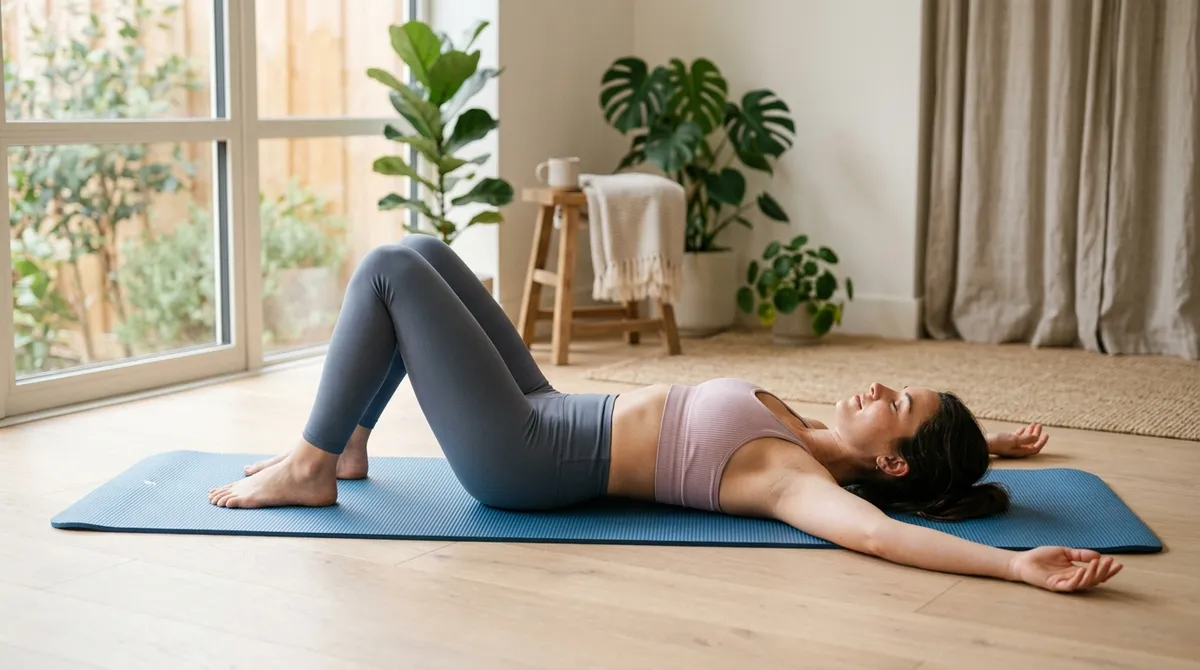
To perform a pelvic tilt, lie on your back with your knees bent and feet flat on the floor. From here, gently flatten your lower back into the mat by tilting your pelvis upward, then slowly release back to a neutral spine. The movement is subtle and controlled — there's no need to force it.
A common mistake is rushing through the motion or gripping the glutes too aggressively. The goal is to create awareness and connection with those deeper stabilizing muscles, not to simply move through a range of motion. Think of it as a reset for your entire core system.
For beginners, this move is also a useful starting point before progressing to more demanding exercises, making it an ideal warm-up within any Pilates routine.
2. High Plank
The high plank is a staple in both yoga and Pilates, and for good reason. When performed with proper form, it challenges the entire core — including the hips, glutes, and shoulders — while also building endurance and body awareness.
Start in a push-up position with your hands directly under your shoulders, arms straight, and body in one long line from head to heels. The key here is engagement: draw your navel gently toward your spine and resist the urge to let your hips sag or pike upward.
According to reports, many people treat the plank as a passive hold, simply enduring it rather than actively working through it. But true deep core activation during a plank requires intention — consciously engaging the pelvic floor and maintaining a neutral spine throughout.
If a full high plank feels too demanding at first, dropping to your knees is a completely valid modification. The priority is form over duration, especially when you're just beginning to build that deep core connection.
3. Seated Roll Down
The seated roll down brings a different challenge to the mix by requiring the deep core to work dynamically as you move through a controlled spinal flexion and extension.
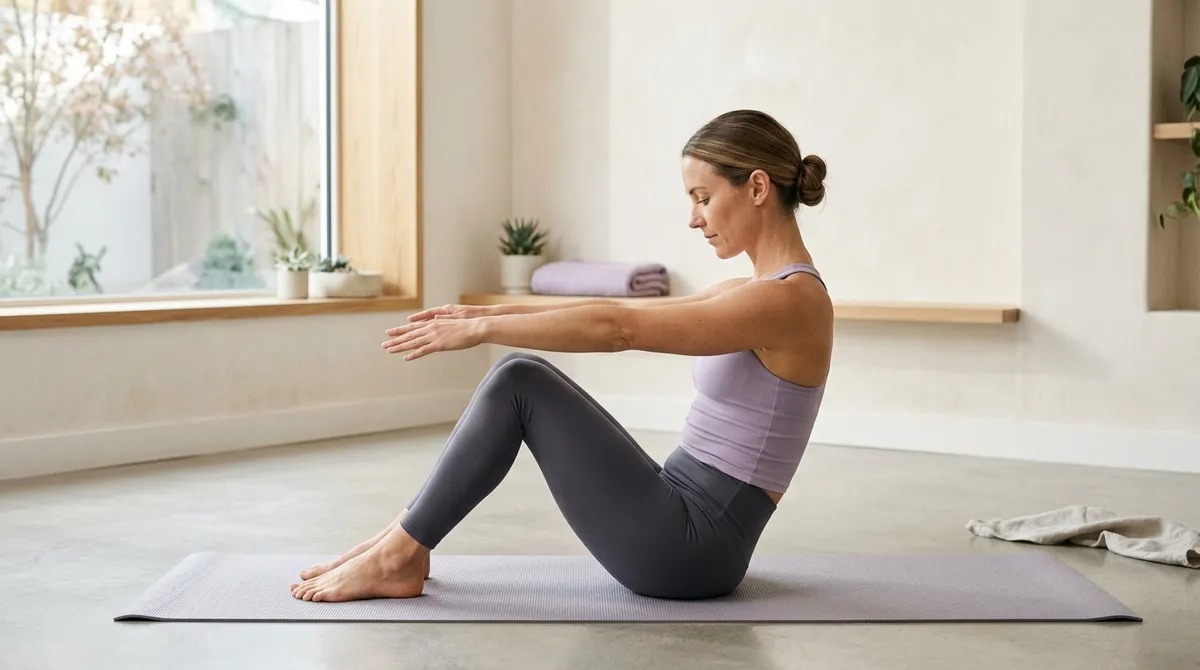
Sit upright on your mat with your knees bent and feet flat on the floor. Extend your arms forward for balance, then slowly begin to lower your spine toward the mat one vertebra at a time — as if you're peeling your back away from an invisible wall. Once you've rolled down as far as feels comfortable, use the same controlled engagement to roll back up to seated.
This exercise is particularly effective at highlighting imbalances. Many people discover they tend to rush or collapse through certain sections of the roll, which reveals where the core loses its engagement. Going slowly and mindfully is the whole point.
The seated roll down also serves as a gentle way to improve spinal mobility alongside core strength — a combination that supports better posture and everyday movement.
Building a Smarter Core Routine
These three moves — pelvic tilt, high plank, and seated roll down — offer a well-rounded foundation for deep core training that anyone can do at home without equipment. They shift the focus away from aesthetics and toward what actually matters: stability, posture, and functional strength.
If you're new to Pilates or returning after a break, starting with these exercises is a low-risk, high-reward approach. Move slowly, breathe consistently, and pay attention to what you feel rather than how things look. That's where the real work — and the real results — begin.