Simone Ashley strength routine searches have surged for good reason: her training style reflects the modern shift toward building power, stamina and resilience, not chasing quick fixes. The Bridgerton and Sex Education star has become a strong example of athletic, performance-led fitness that supports demanding workdays, movement confidence and long-term wellbeing.
Why Simone Ashley's Fitness Approach Stands Out
Celebrity workouts often focus on appearance. Ashley's routine feels different because it is rooted in strength and conditioning. That means the goal is not only muscle tone. It is also better posture, stronger joints, improved endurance and a body that can handle pressure.
For an actor, this type of training makes practical sense. Filming can involve long hours, repeated takes, dance rehearsals, travel and limited recovery time. A balanced fitness plan helps maintain energy without draining the body. It also supports confidence in costumes, choreography and physically demanding scenes.
The key lesson is simple. A strong body is built through consistency, smart exercise choices and enough recovery. Ashley's style shows why functional strength has become one of the most effective fitness goals for women.
The Foundation: Strength Training With Purpose
A well-designed Simone Ashley inspired workout would begin with compound strength exercises. These moves recruit several muscle groups at once. They also deliver more value than isolated exercises when time is limited.
Lower-body strength is especially important. Squats, deadlift variations, lunges and hip thrusts train the glutes, hamstrings, quads and core. These muscles support posture, walking, climbing stairs and athletic movement. They also create the powerful base needed for conditioning drills.
Upper-body work matters too. Rows, presses, assisted pull-ups and cable exercises help build back, shoulder and arm strength. This balances the body and reduces the rounded posture many people develop from phones, desks and travel.
The most effective version of this routine would avoid random exercise stacking. Each movement should have a role. A squat pattern builds leg strength. A hinge strengthens the posterior chain. A row supports the back. A loaded carry trains grip, posture and core control.
Conditioning: The Engine Behind The Routine
Strength builds the structure. Conditioning builds the engine. This is where a workout becomes more than a gym session. Short bursts of controlled intensity improve cardiovascular fitness, speed, coordination and mental resilience.
Common conditioning tools include sled pushes, battle ropes, bike intervals, rowing machines and kettlebell swings. These exercises raise the heart rate quickly while still demanding full-body control. They are tough, but they can be scaled for different fitness levels.
For beginners, conditioning does not need to mean exhaustion. A simple format works well. Perform 20 to 30 seconds of effort, then rest for 60 to 90 seconds. Repeat for six to ten rounds. The aim is quality, not collapse.
For experienced gym-goers, conditioning can be placed after strength training. This keeps heavy lifts safe and effective. It also prevents fatigue from ruining technique during the most demanding exercises.
Core Training That Goes Beyond Crunches
Ashley's athletic look is not just about visible abs. True core strength is about stability. It helps the body transfer force, stay balanced and protect the lower back.
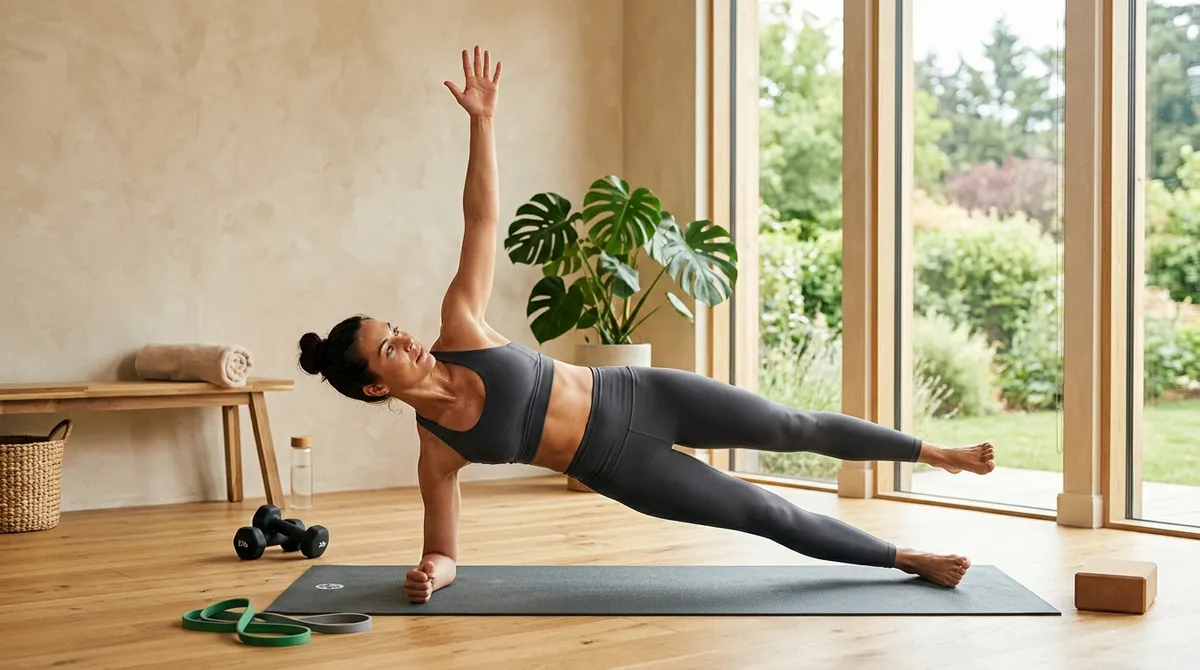
Effective core training includes planks, dead bugs, side planks, Pallof presses and farmer's carries. These moves teach the body to resist rotation and maintain alignment. That skill is useful during lifting, dancing, running and everyday movement.
Rotational control is especially valuable for performers. Turning, reaching and changing direction all require the core to coordinate with the hips and shoulders. A strong midsection makes those movements smoother and safer.
Mobility And Recovery Are Part Of The Plan
No strength and conditioning routine works without recovery. Mobility drills help joints move well before training. Stretching, easy walking and good sleep help the body adapt afterward.
Warm-ups should match the workout ahead. Before lower-body lifting, use hip openers, glute activation and bodyweight squats. Before upper-body sessions, include shoulder circles, band pull-aparts and light rows. This prepares the nervous system and improves movement quality.
Recovery is also where progress actually happens. Muscles do not get stronger during the workout itself. They rebuild after training, especially when supported by protein, hydration and rest. Skipping recovery can lead to plateaus, soreness and poor performance.
How To Train Like Simone Ashley Safely
You do not need a celebrity trainer to borrow the principles behind this style. The best approach is to build a weekly plan that combines strength, conditioning, mobility and rest.
A solid three-day structure could include one lower-body strength session, one upper-body and core session, and one full-body conditioning day. Add walking, gentle cycling or yoga on lighter days. This keeps the routine sustainable.
Start with weights that allow clean technique. Increase load slowly. If form breaks down, the weight is too heavy or the set is too long. Good training should challenge you, but it should not feel chaotic.
Here is a simple sample session: goblet squats, Romanian deadlifts, step-ups, seated rows, push-ups, farmer's carries and a short bike finisher. Rest between sets. Focus on control. Finish feeling worked, not destroyed.
Why Strength Training Is So Effective For Women
Strength training offers benefits far beyond the gym mirror. It supports bone density, joint health, metabolism, posture and confidence. It can also help women feel more capable in daily life.
Conditioning adds another layer. It improves heart health, stamina and stress tolerance. Together, strength and conditioning create a balanced routine that supports both performance and wellbeing.
This is why Ashley's approach resonates. It reflects a healthier fitness message. Train to feel powerful. Train to move better. Train to support the life you want, not to punish your body.
The Takeaway
Simone Ashley's strength and conditioning routine highlights one of the smartest trends in fitness: performance first. By combining compound lifts, full-body conditioning, core stability, mobility and recovery, her approach offers a realistic blueprint for anyone who wants to get stronger and fitter.
The best part is that the same principles can work at every level. You can begin with bodyweight exercises, light dumbbells and short intervals. Over time, you can increase resistance, refine technique and build real athletic confidence.
If you want a routine that feels empowering, start with strength. Add conditioning with care. Recover properly. That combination is what creates lasting results.